Kullu & Manali
Manali trailheads, Solang Valley, Parvati hot springs, alpine glaciers, and iconic high-altitude pass crossings
All Destinations
Beas Kund Trek
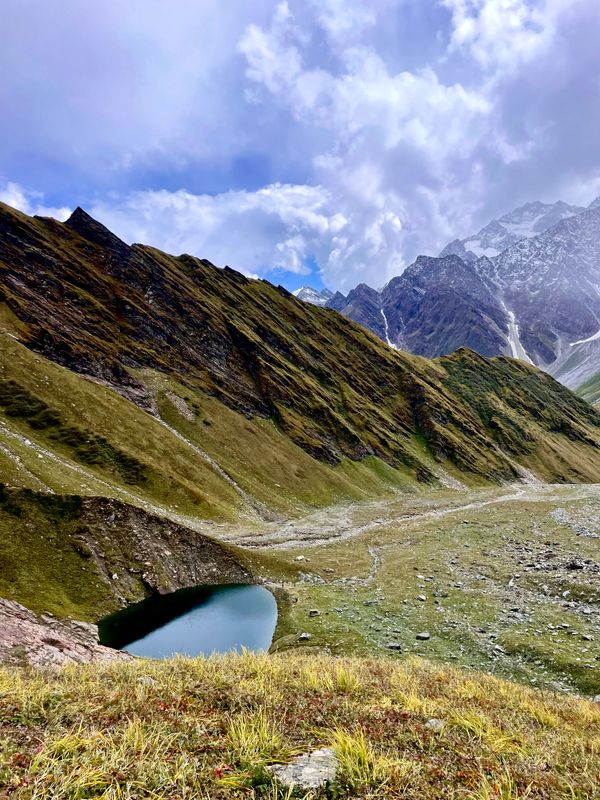
Beas Kund (also revered as Vyas Kund) is the sacred high-altitude glacial tarn (3,700m / 12,139 ft) from which the River Beas (ancient Vipasha) originates. Nestled directly beneath the colossal amphitheater of Friendship Peak (5,289m), Shitidhar (5,290m), Ladakhi Peak (5,345m), and the jagged pyramid of Hanuman Tibba (5,982m), it represents one of the most scenic and rewarding alpine treks in the Upper Solang Valley of Manali. The 15.5 km round-trip trail begins at the Dhundi Bridge checkpoint (2,840m) on the roaring headwaters of the Beas, climbing through ancient silver birch (Bhojpatra) and deodar woodlands to the broad glacial floodplain of Bakarthach (3,300m). Beyond the shepherd meadows, the trail ascends steeply over rugged terminal moraines, granite boulder fields, and hanging glacier ridges to reveal the serene, turquoise tarn cradled at 3,700 meters.

Lamadugh Meadow
Lamadugh is a serene meadow nestled in the dense deodar and oak forests above Manali. The trail offers a gentle ascent through shaded woodland paths, opening up to a vast alpine clearing at around 3,300 meters.
Jogni Falls Trek
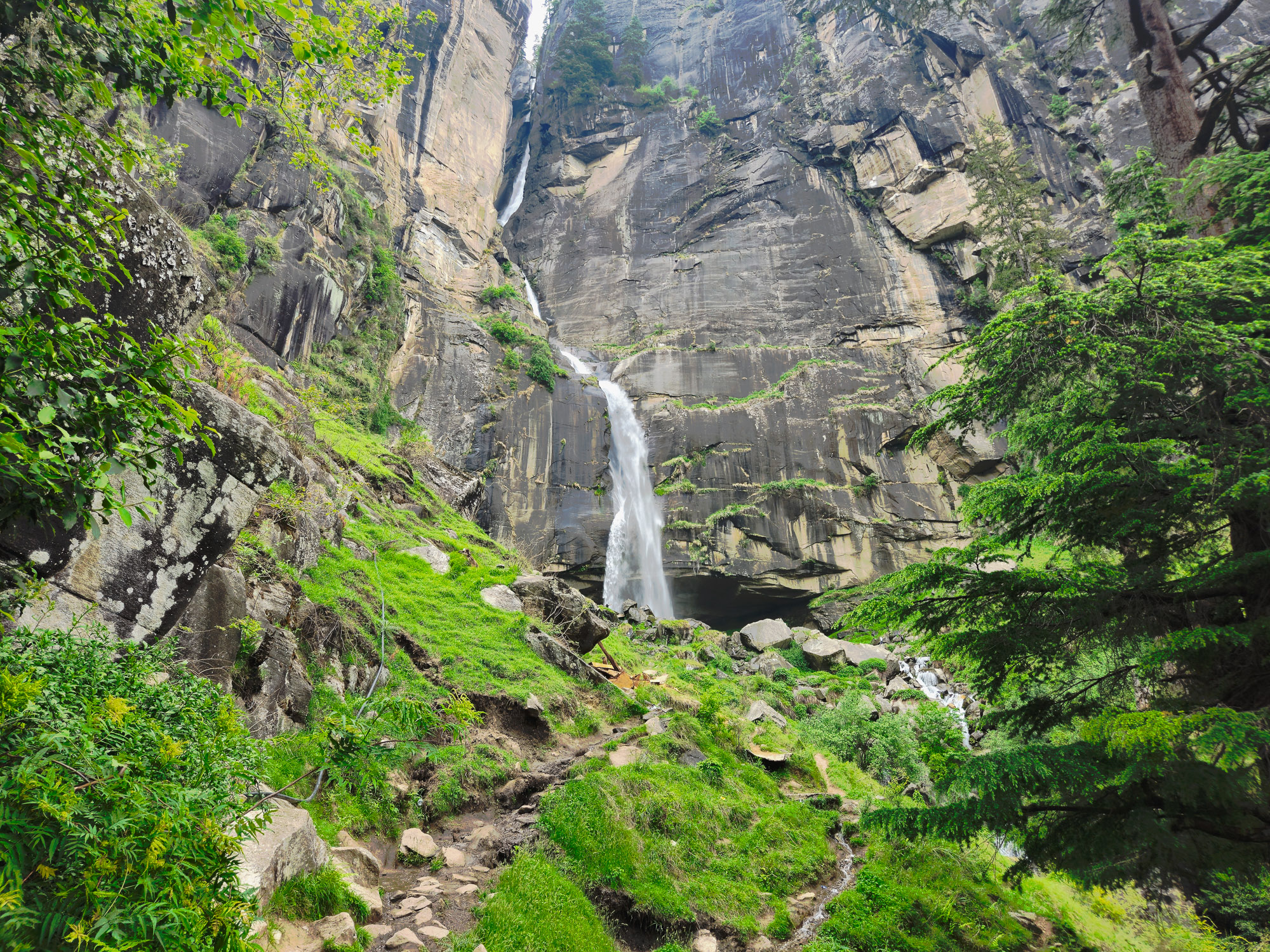
Jogni Falls (Jogini Waterfall) is a sacred 150-foot cascading cataract plunging down sheer granite cliffs in the Kullu Valley above Vashisht village, approximately 4 km from Manali. Revered by local villagers as the sacred dwelling of the village Joginis (protective female deities), the trail departs from Vashisht temple square and ascends gently through fragrant deodar woods, ancient pine forests, and terraced apple orchards. The trail features two distinct stages: the lower tiered cascades and boulder streams where glacial waters rush violently over smooth rocks, followed by a steeper dirt trail winding through tree roots and crags up to the grand upper amphitheater. Here, the full vertical plunge crashes into a crystalline plunge pool, drenching hikers in invigorating glacial spray while framing sweeping vistas of the Beas Valley and snow-draped Pir Panjal crests.
Patalsu Peak Trek
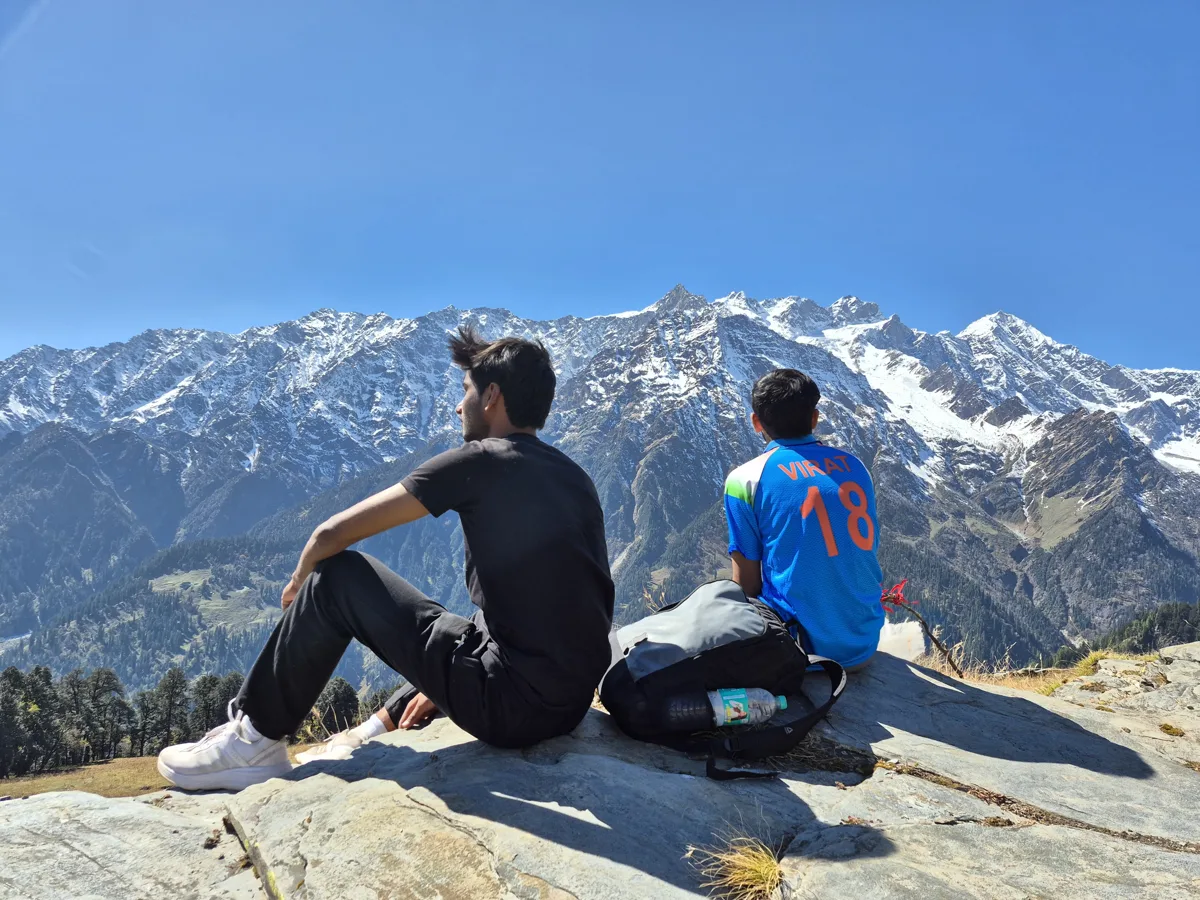
Patalsu Peak stands at 4,261 meters (13,980 ft) above Solang Valley, widely recognized as the premier beginner-friendly 4,000m trekking peak in Manali and one of the finest non-technical summits in Himachal Pradesh. The route covers 16 km round-trip from Solang Village (8 km each way) with an intense vertical gain of +1,781 meters. Celebrated as one of the best snow Manali treks during spring (May to June) when the upper ridgelines retain snowfields, and an iconic high-altitude speed hike trek in autumn for endurance athletes conquering the summit in a grueling 12–13 hour single-day push. From the summit crest, trekkers enjoy an unrestricted 360-degree panorama of Hanuman Tibba (5,982m), Friendship Peak (5,289m), Shitidhar, Ladakhi Peak, Rohtang Pass, and the boundless Dhauladhar and Pir Panjal ranges.

Hampta Pass Trek
Hampta Pass is one of the most dramatic crossovers in the Indian Himalayas — a route that transforms from lush green Kullu Valley on one side to the stark, lunar landscape of the Lahaul Valley on the other. The contrast in terrain and vegetation over just 26 km is staggering, making this one of the most visually rewarding moderate treks in Himachal Pradesh.
Bhrigu Lake Trek
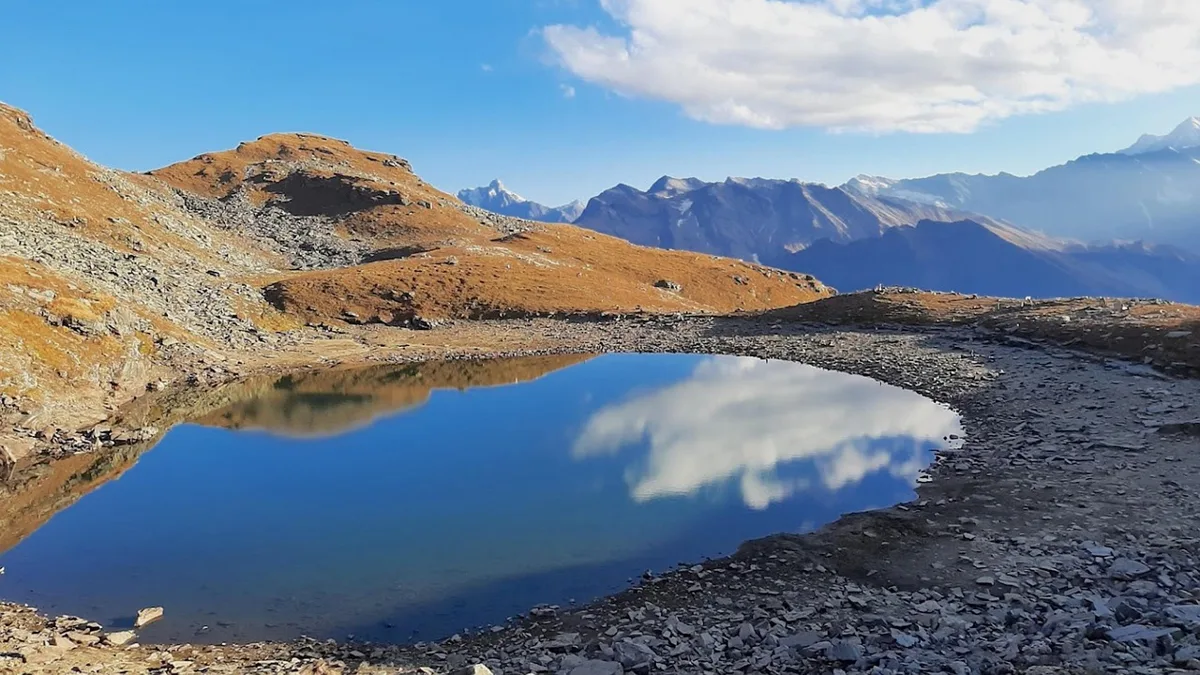
Bhrigu Lake is a stunning high-altitude lake at 4,300 meters on the edge of the Rohtang plateau. Named after the sage Bhrigu, the lake remains frozen for much of the year and is surrounded by vast rolling meadows that explode with wildflowers in early summer. It is considered one of the most accessible high-altitude alpine lakes near Manali.
Chandrakhani Pass Trek
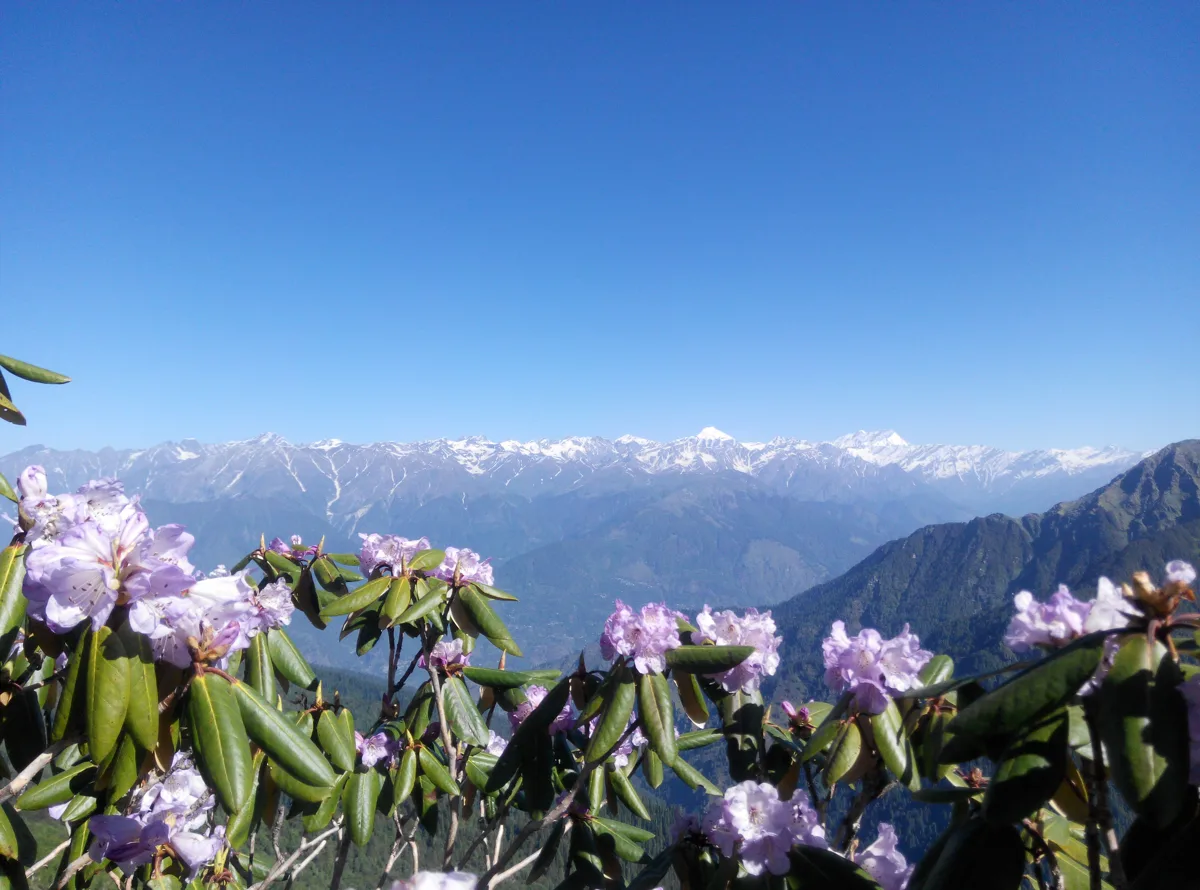
Chandrakhani Pass is a high-altitude crossing connecting the Kullu Valley to the secluded Malana village — home to one of the most unique and ancient tribal communities in the world. The route traverses stunning oak and rhododendron forests, high alpine meadows, and the dramatic pass itself at 3,660m, before descending to the legendary Malana village perched above the Malana gorge.

Friendship Peak
Friendship Peak at 5289 meters is one of the most accessible high-altitude peaks in the Himachal Himalayas, making it a popular choice for mountaineers looking to gain experience above 5000 meters. Located in the Pir Panjal range near Manali, the peak offers a perfect blend of glacier travel, snow climbing, and ridge walking without requiring advanced technical skills. The expedition typically spans 6-7 days from Manali, passing through the lush meadows of Solang Valley before ascending into the alpine zone above the treeline. The route traverses the Lady Leg glacier and involves moderate snow slopes of 35-45 degrees near the summit pyramid. On a clear summit day, climbers are rewarded with panoramic views of Hanuman Tibba, Deo Tibba, Indrasan, and the vast Pir Panjal and Greater Himalayan ranges stretching across the horizon.
Hanuman Tibba
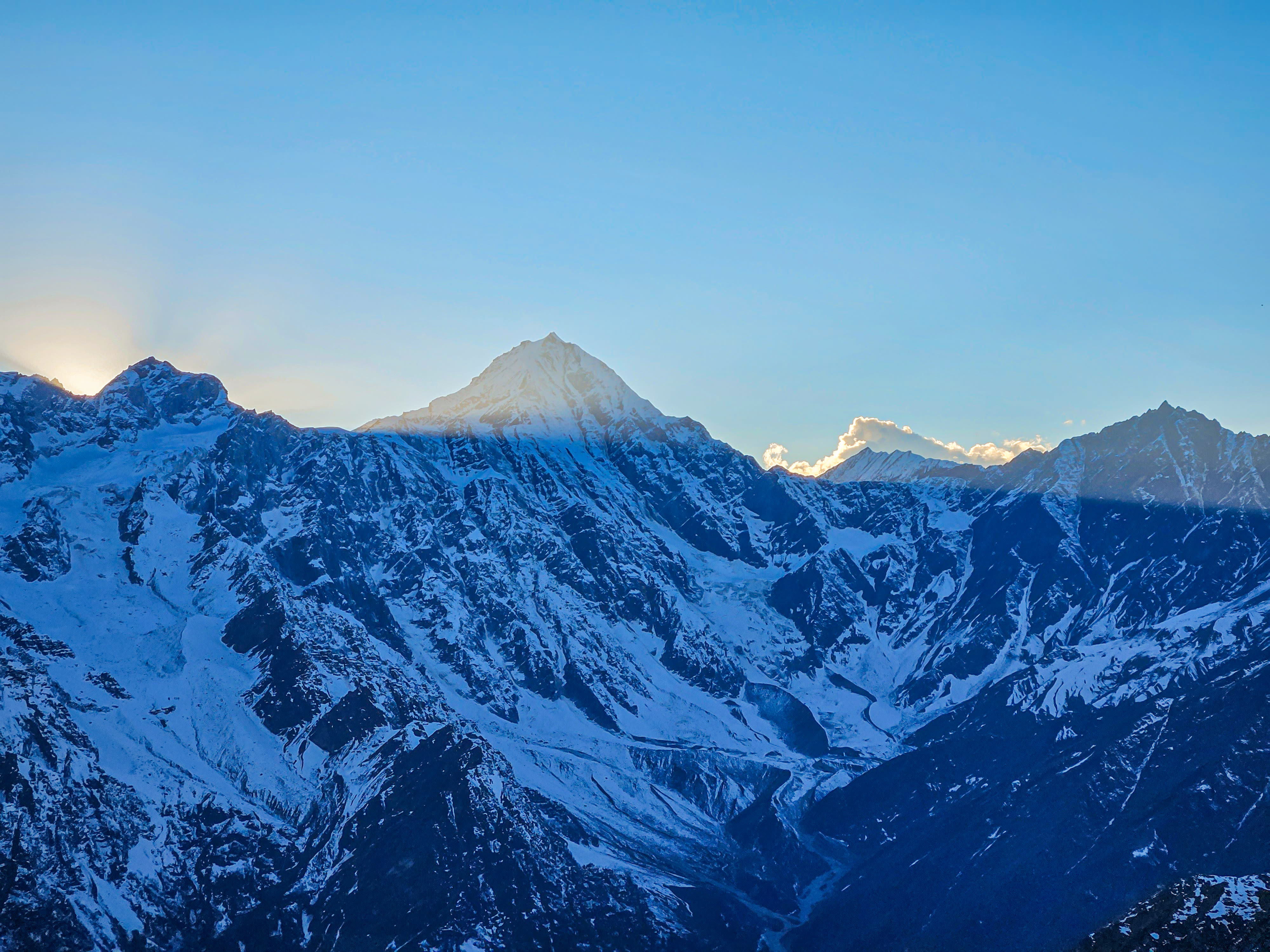
Hanuman Tibba at 5982 meters is the highest peak in the Dhauladhar range and a coveted objective for experienced mountaineers in the Indian Himalayas. Rising dramatically above the Solang Valley near Manali, its distinctive triangular summit is visible from much of the Kullu Valley and serves as a landmark for the entire region. The peak presents a serious mountaineering challenge with steep ice walls, exposed ridges, and unpredictable weather patterns. The standard route involves technical ice climbing sections up to 60 degrees, mixed rock and ice terrain, and requires solid rope management skills. It is classified as a difficult peak by the Indian Mountaineering Foundation. Historically significant in Indian mountaineering, Hanuman Tibba has been a training ground for expeditions to higher Himalayan peaks. The mountain demands respect — its combination of altitude, technical terrain, and rapid weather changes makes it a true test of mountaineering ability.
Deo Tibba
Deo Tibba at 6001 meters is a striking pyramidal peak that dominates the skyline south of Manali. As one of the few 6000-meter peaks accessible from the Kullu Valley, it holds a special place in Indian mountaineering as a stepping stone between intermediate and high-altitude expeditions. The peak's elegant symmetry and challenging climbing routes have attracted mountaineers since the first ascent in 1952. The standard route from the Jagatsukh Valley offers a comprehensive mountaineering experience encompassing glacier navigation, steep snow and ice climbing, and exposed ridge traversals. The peak sits at the junction of the Pir Panjal and Great Himalayan ranges, offering unobstructed views in all directions from the summit. Deo Tibba is known for its rapidly changing weather conditions, with the summit often enveloped in clouds by midday. The combination of altitude, technical difficulty, and unpredictable weather makes it a respected objective that demands thorough preparation and strong mountaineering fundamentals.

Indrasan
Indrasan at 6221 meters is one of the most formidable peaks in the Kullu-Manali region and a serious objective for experienced mountaineers. Its steep, fluted ice walls and challenging approach make it one of the harder peaks to climb in the Indian Himalayas relative to its altitude. The mountain rises sharply above the Malana Valley, presenting an imposing profile visible from multiple vantage points around Manali. First climbed in 1962 by a joint Indo-British expedition, Indrasan has maintained its reputation as a peak that demands technical excellence and strong alpine fitness. The mountain features multiple routes of varying difficulty, with the standard south ridge being the most frequently attempted. Even this route involves sustained ice climbing at high altitude and requires absolute commitment once above the midway point. The peak is flanked by its sister summit Deo Tibba to the southeast and the Duhangan Col connecting to the peaks of the Greater Himalayan range. The expedition provides an immersive high-mountain experience in one of Himachal Pradesh's most dramatic glacial landscapes.
Solang Valley
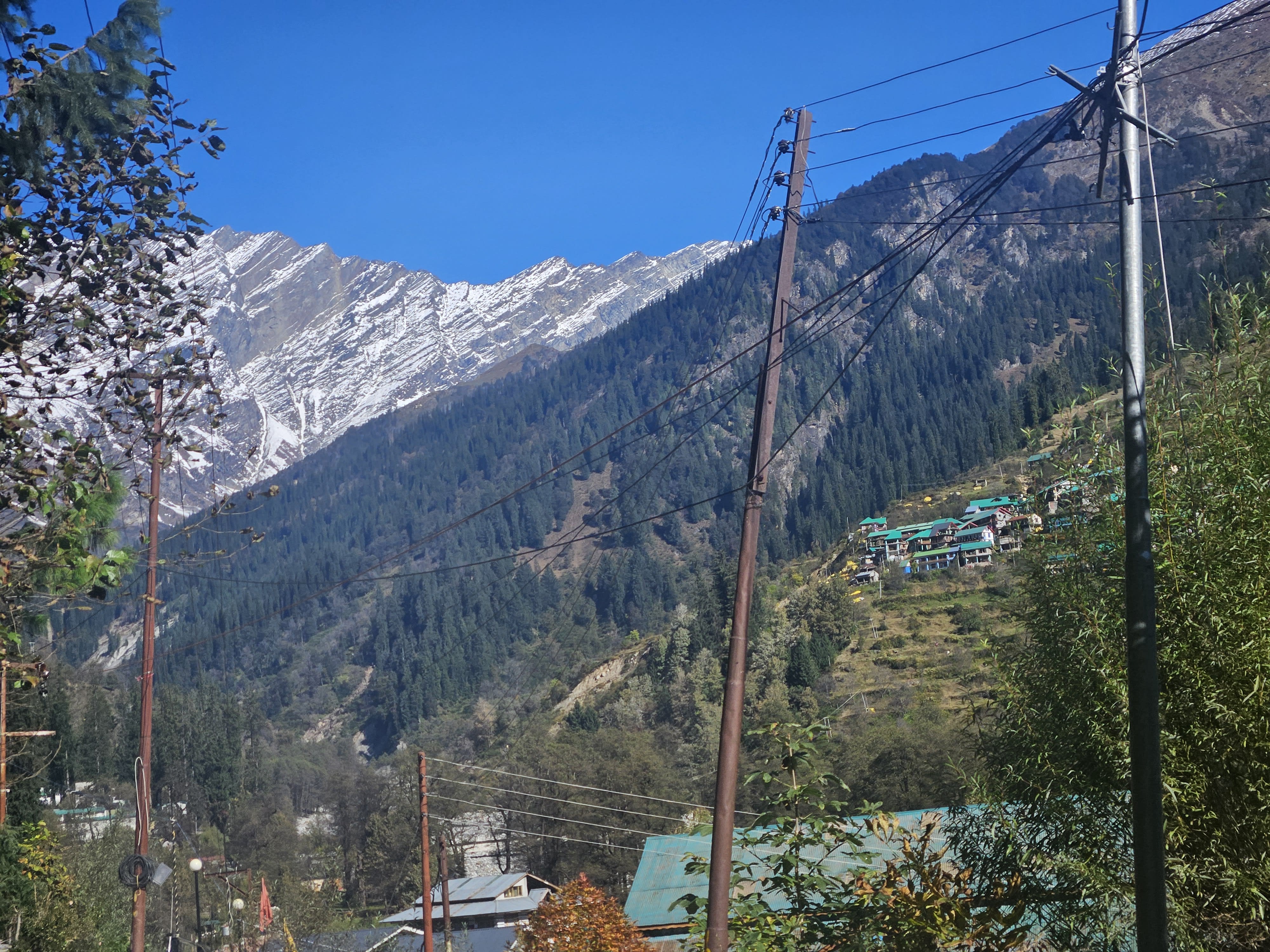
Solang Valley lies 14 km northwest of Manali and serves as the gateway to the Beas Kund glacier and Patalsu Peak trails. It features skiing slopes in winter and paragliding in summer.
Sethan Village — Hampta Valley
Perched at 2,700 meters atop the Hampta ridge 12 km above Prini, Sethan is a secluded Buddhist Khampa mountain village offering sweeping 360-degree vistas of the Dhauladhar Range, Indrasan, and the Kullu Valley far below. Resettled by horse-breeding Tibetan migrants in the mid-20th century, Sethan has emerged as an internationally celebrated alpine adventure hub: a world-class bouldering destination with hundreds of virgin granite problems, India's premier winter igloo stay and ski-touring zone, and the official starting roadhead for the Hampta Pass & Chandratal crossover trek.

Tirthan Valley & GHNP
Pristine buffer zone of the UNESCO Great Himalayan National Park, famous for crystal trout streams, dense deodar forests, and peaceful trails to Jalori Pass and Serolsar Lake.
Hadimba Devi Temple
Built in 1553 CE by Maharaja Bahadur Singh, the Hadimba Devi Temple (also known as the Dhungri Temple) is an ancient four-tiered wooden pagoda dedicated to Goddess Hadimba, wife of the Pandava prince Bhima from the Mahabharata. Nestled within the colossal, sacred cedar groves of the Dhungri Van Vihar, the temple is an architectural marvel of indigenous Himalayan woodcraft, adorned with intricate carvings of deities, dancers, foliate motifs, and real ibex and stag horns mounted on outer walls.
Old Manali
Perched gracefully on a sunlit hillside across the rushing Manalsu River, Old Manali (the ancestral village of Manaligarh) is the cultural antithesis of the commercial highway town. Characterized by multi-storied slate-roofed Kath-Kuni timber-and-stone houses, heritage apple orchards, winding stone alleys, artisan silver studios, live music cafes, and the sacred Manu Maharishi Temple (the only temple in India dedicated to Sage Manu, progenitor of mankind). It is also the historic trailhead for the high alpine trek to the Lamadugh meadow plateau.

Kheerganga Hot Springs Trek
One of the most famous trekking routes in the Parvati Valley, winding through dramatic gorges, roaring waterfalls, and towering pine and oak forests from Barshaini. Kheerganga ('milky holy water') sits in an alpine meadow surrounded by glaciated peaks, renowned for its natural geothermal sulfur hot springs where trekkers soak after completing the 12 km mountain ascent.
Pin Parvati Pass Expedition
The crown jewel of Himalayan crossover expeditions, connecting the lush, rain-drenched coniferous forests of Parvati Valley in Kullu with the stark, rain-shadow cold desert of Pin Valley in Spiti. Trekkers traverse dense pine woods, raging river crossings, the sacred high tarn of Mantalai Lake (4,100m), and vast glaciated crevasse fields to summit the formidable 5,319m pass before descending into the Martian landscapes of Mudh.
Rohtang Pass
Rohtang Pass (3,978m / 13,051 ft) is the historic mountain gateway on the Pir Panjal Range connecting the Kullu Valley with the high arid valleys of Lahaul and Spiti. Meaning 'Pile of Corpses' in Tibetan due to historical storms that caught ancient caravans off guard, Rohtang offers panoramic views of glaciated peaks, hanging glaciers, and the source of the Beas River at Beas Kund.
Jalori Pass & Serolsar Lake
Jalori Pass (3,120m) is a high mountain pass connecting the inner Kullu Valley with Shimla and the Sutlej river basin. From the pass, an enchanting 5 km gentle forest trail winds through dense oak, rhododendron, and blue pine woods to Serolsar Lake—a pristine emerald body of water held sacred to Buddhi Nagin, the mythical mother of 60 snake deities.
Manali Mall Road
The central pedestrian-only promenade of Manali town, Mall Road is the social and commercial crossroads of the upper Beas Valley. Lined with wooden gables, traditional handloom emporiums selling authentic Kullu shawls, Himachali pattu coats, Tibetan handicraft stalls, Hong Kong market bazaars, and cozy sweetshops serving steaming jalebis and siddu. Directly adjacent to the mall is Van Vihar, a serene nature sanctuary of century-old deodar trees bordering the boulder-strewn waters of the Beas River.
Kullu Town
Situated on the broad banks of the Beas River, Kullu is the historic administrative capital of the Kullu Valley—historically known as Kulanthpitha ('the end of the habitable world') and Dev Bhumi ('the Valley of the Gods'). Globally celebrated for its centuries-old handloom weaving traditions, Kullu is home to major artisan clusters and cooperative factories (including the historic Bhuttico cooperative founded in 1944) producing world-famous Kullu shawls with vibrant geometric Himalayan borders. It is also home to the 17th-century Raghunath Temple at Sultanpur and Dhalpur Maidan, the sprawling open amphitheater where the legendary International Kullu Dussehra festival convenes over 300 local village deities (devi-devtas) for a week-long celebration.
Vashisht Village & Hot Springs
Perched on a steep pine-clad ridge 3 km northeast of Manali across the Beas River, Vashisht is an ancient mountain village dedicated to Maharishi Vashistha, one of the seven Saptarishis and royal guru of Lord Rama. The village features traditional wood-and-stone Himachali houses and a 4,000-year-old stone temple enclosing natural geothermal sulfur springs, channeled into public and private mineral bathing kunds prized for centuries for their therapeutic and skin-healing properties. Vashisht also serves as the traditional pedestrian trailhead for the breathtaking hike to the 160-foot cascading Jogini Waterfall.
Burwa Village
Situated 6 km north of Manali on the right bank of the Beas River, Burwa is an authentic agricultural hamlet of multi-tiered Kath-Kuni houses, stone courtyards, and deep heritage apple orchards. Far quieter than downtown Manali, Burwa offers panoramic vistas of the snow-clad Pir Panjal ridges and the Solang Valley entrance. The village is well-known among climbers for its natural granite boulder crags, proximity to Nehru Kund (a pristine natural freshwater spring where Prime Minister Nehru would drink on his mountain visits), and pastoral mountain walks through terraced fields.
Kothi Village & Gorge
Nestled 12 km north of Manali at the eastern base of the Rohtang Pass, Kothi is a dramatic high-valley village famous for its deep, narrow gorge where the Beas River plunges through a chasm of vertical granite cliffs over 100 feet deep. In historical times before motorable roads, Kothi was the mandatory caravan rest stop and basecamp for travelers and pony drivers preparing to make the treacherous ascent across the 3,978m Rohtang Pass into Lahaul. The village offers sublime views of hanging glaciers, the Solang Range, and the roaring river gorge.
Gulaba Alpine Meadow
Situated 20 km north of Manali on the winding highway to Rohtang Pass, Gulaba is a picturesque sub-alpine meadow nestled amid stands of birch, fir, and deodar trees at 3,165 meters. Named in honor of Raja Gulab Singh of Jammu & Kashmir who established his high camp here during an expedition, Gulaba is renowned as the official trailhead for the renowned Bhrigu Lake alpine trek (4,300m). During late autumn, winter, and spring when Rohtang is snowbound, Gulaba serves as the primary designated snow viewpoint where visitors experience deep snowfields, sledding, and paragliding with unobstructed views of the Solang Valley and Hanuman Tibba massif.
Marhi
Perched high above the treeline at 3,320 meters midway between Gulaba and the Rohtang summit (35 km from Manali), Marhi is an expansive alpine plateau framed by soaring sheer cliffs and cascading seasonal waterfalls. Historically a vital overnight acclimatization station and horse-caravan halt on the trans-Himalayan trade trail to Leh, Marhi today is famous for its cluster of roadside mountain dhabas serving piping hot Maggi, rajma-chawal, and ginger-lemon-honey tea. It is also an important winter snow-sports hub when the upper passes remain inaccessible.
Dhundi
Situated 8 km northwest of Solang along the roaring headwaters of the Beas River, Dhundi is a pristine alpine valley and roadhead surrounded by dense silver birch, spruce, and rhododendron forests. It is the historic trailhead for the legendary Beas Kund glacier trek (3,700m) and the primary base for technical mountaineering expeditions to Friendship Peak (5,289m), Hanuman Tibba (5,982m), and the Seven Sisters range. With the completion of the Atal Tunnel, Dhundi also marks the approach valley to the South Portal of the 9.02 km tunnel.
Bijli Mahadev Temple & Trail
Perched dramatically on the wind-scoured summit plateau of the Mathan ridge at 2,460 meters, Bijli Mahadev is one of the most sacred and mystifying temples in the Western Himalayas. The temple is famous for its 60-foot tall wooden flagstaff (dhwaja stambha) that miraculously attracts high-voltage divine lightning from thunderclouds during storms. According to ancient lore, the lightning bolt strikes the Shiva lingam inside the sanctum without causing fire, shattering the stone into fragments. The head priest then meticulously reassembles the lingam using clarified butter (sattu and makhan) until it solidifies once more into a single stone. The summit offers an unparalleled 360-degree vantage point overlooking the confluence of the Beas and Parvati Rivers, Kullu town, Bhuntar airport, and the snow-capped Pir Panjal and Great Himalayan National Park peaks.
Atal Tunnel Rohtang
Built beneath the formidable 3,978m Rohtang Pass under the Pir Panjal Range, the 9.02 km long Atal Tunnel is the world's longest single-tube highway tunnel above an elevation of 10,000 feet (3,048 m). Completed by the Border Roads Organisation (BRO) in October 2020 after two decades of complex sub-zero engineering through difficult shear zones, the horseshoe-shaped tunnel bypasses 46 km of treacherous hairpin roads and provides all-weather connectivity between Manali and the high-altitude Lahaul Valley. Entering the South Portal (3,060m) near Dhundi in the lush pine-clad Kullu Valley and emerging 10 minutes later at the North Portal (3,071m) into the dramatic, barren rocky desert canyon of Sissu is one of the most astonishing geographic transitions in the Himalayas.
Sissu (North Portal)
Situated in the high Chandra River valley just 5 km past the North Portal of Atal Tunnel, Sissu (known historically as Khwaling) is a breathtaking high-altitude oasis that has become the premier day excursion from Manali. Surrounded by weeping willows, golden poplar groves, and terraced barley fields, Sissu is globally renowned for the Palden Lhamo Dhar waterfall—a thunderous 50-meter glacial torrent dropping down a sheer dark cliff face opposite the village. Sissu Lake offers peaceful lakeside walks, ziplining, camping, and winter snow-sports.
Koksar Snow Point
Situated at 3,140 meters in a dramatic bend of the Chandra River beneath the northern slopes of Rohtang Pass, Koksar is the historic first village and customs outpost of the Lahaul Valley. Before the Atal Tunnel was built, Koksar was the legendary checkpoint where travelers emerged after surviving the perilous Rohtang crossing. Today, located just 18 km east of the tunnel's North Portal, Koksar has become one of Himachal's most thrilling snow adventure hubs, famous for holding deep snow banks well into late spring, snow-tubing, ATV snow bikes, frozen river vistas, and roadside dhabas serving authentic Himalayan mutton thukpa and hot butter tea.